


Supporting
Practitioners & Organisations
Alongside my private practice, I work in a number of ways with those in the helping professions, including counselling, psychotherapy, social care, health, education, first responders, and other roles that support people in distress, pain, or crisis.
This may be through individual therapy, reflective spaces, or working with teams and organisations, offering a range of ways of working depending on need.
Much of the work in the helping professions involves supporting others over time. While meaningful, it can also carry an emotional and psychological impact.
Much of the emotional impact of working in the helping professions is described using terms such as burnout, compassion fatigue and vicarious trauma. These can be helpful, but the experiences aren't always distinct.
In 2016, I developed the term Professional Trauma & Fatigue (PT&F) through my MSc research, bringing together the different ways supporting others can affect us.
Rather than offering another diagnosis, PT&F provides a way of recognising and understanding these overlapping experiences.

This work can impact us, not because we are failing, but because we are human.
PT&F helps us make sense of that impact. From there, the focus is not on fixing ourselves, but on how we stay in relationship with ourselves within it.
Drawing on a person-centred approach:
empathy becomes understanding our own experience
congruence becomes honesty about the impact
unconditional positive regard becomes permission to matter
When we relate to ourselves in this way, we are more able to notice what we need and respond to it.
The Five Pillars of Protection support that response, while the rewards help us stay connected to what matters.
This is not about getting self-care right, but about creating the conditions where a sustainable way of staying can emerge.
A way of staying
in the work
What can i offer?
My work recognises both the impact of caring for others and what supports practitioners to remain well within it, while also acknowledging the often less visible rewards of the work
-
My wider training and organisational work is delivered through SelfCare Psychology, including structured training and reflective programmes such as Together in Practice, supporting practitioner wellbeing and reflective cultures within organisations.
Find out more about SelfCare Psychology -
I deliver training, reflective sessions, keynote speaking, and consultancy for helping professionals and organisations.
Topics often include:
Professional Trauma & Fatigue
The Risks, Remedies & Rewards of working with others.
Burnout and compassion fatigue
Practitioner wellbeing
Sustaining ourselves within helping roles
The rewards of caring work
-
I offer facilitated reflective spaces for teams, particularly following difficult or significant events such as loss, exposure to distressing situations, or periods of sustained pressure.
These are not formal debriefs, but structured spaces to process, reflect, and reconnect as a team.
Practice Well
Practice Well is a unique reflective and psychoeducational support model designed by Sass especially for helping professionals navigating emotionally demanding work.
It provides a structured space to consider the impact of the work, develop awareness, and explore what supports sustainable practice.
Practice Well can be delivered on a one-to-one basis for individual practitioners or commissioned by organisations, including local authorities, NHS and Foundation Trusts, education settings, and other services supporting staff exposed to high levels of distress, trauma, responsibility, and emotional demand.
Grounded in a Professional Trauma & Fatigue lens, Practice Well aims to provide a non-pathologising way of understanding the impact of the work, whilst exploring what supports people to remain well within it.
A small group model is currently in development.

The Thinking
Behind My Work
Much of the work within the helping professions involves supporting others over time, and whilst meaningful, it can also carry an emotional and psychological impact.
I first developed the Professional Trauma & Fatigue (PT&F) umbrella through my MSc research in 2016, bringing together the different ways that supporting others can affect us, particularly within the helping professions.
Professional Trauma & Fatigue offers a way of understanding experiences often described through terms such as burnout, compassion fatigue, secondary traumatic stress, and vicarious trauma.
Rather than focusing on diagnosis, PT&F aims to provide language that helps practitioners recognise and make sense of their experiences.
Alongside recognising the impact of the work, I am equally interested in what supports us to remain well within it and in the often less visible rewards that can emerge through caring for others.
Through the Five Pillars of Protection, the remedies, we begin to notice what helps us stay well, alongside an awareness of potential risks and space to recognise the value, meaning, and growth that can also be found within the work.
Drawing on a person-centred approach, I encourage practitioners to understand their experience, be honest about how they are, and recognise that they matter too.
In this way, staying well becomes less about fixing ourselves and more about creating the conditions that support a sustainable way of remaining in the work.
If you’re considering therapy, you’re welcome to get in touch.
We can arrange an initial conversation to see whether working together feels like the right fit.
Downloads & Resources
A growing collection of thoughtful, accessible resources, whether you are looking for personal support, learning to support others or working in an emotionally demanding role.
Take a look and use what feels helpful.
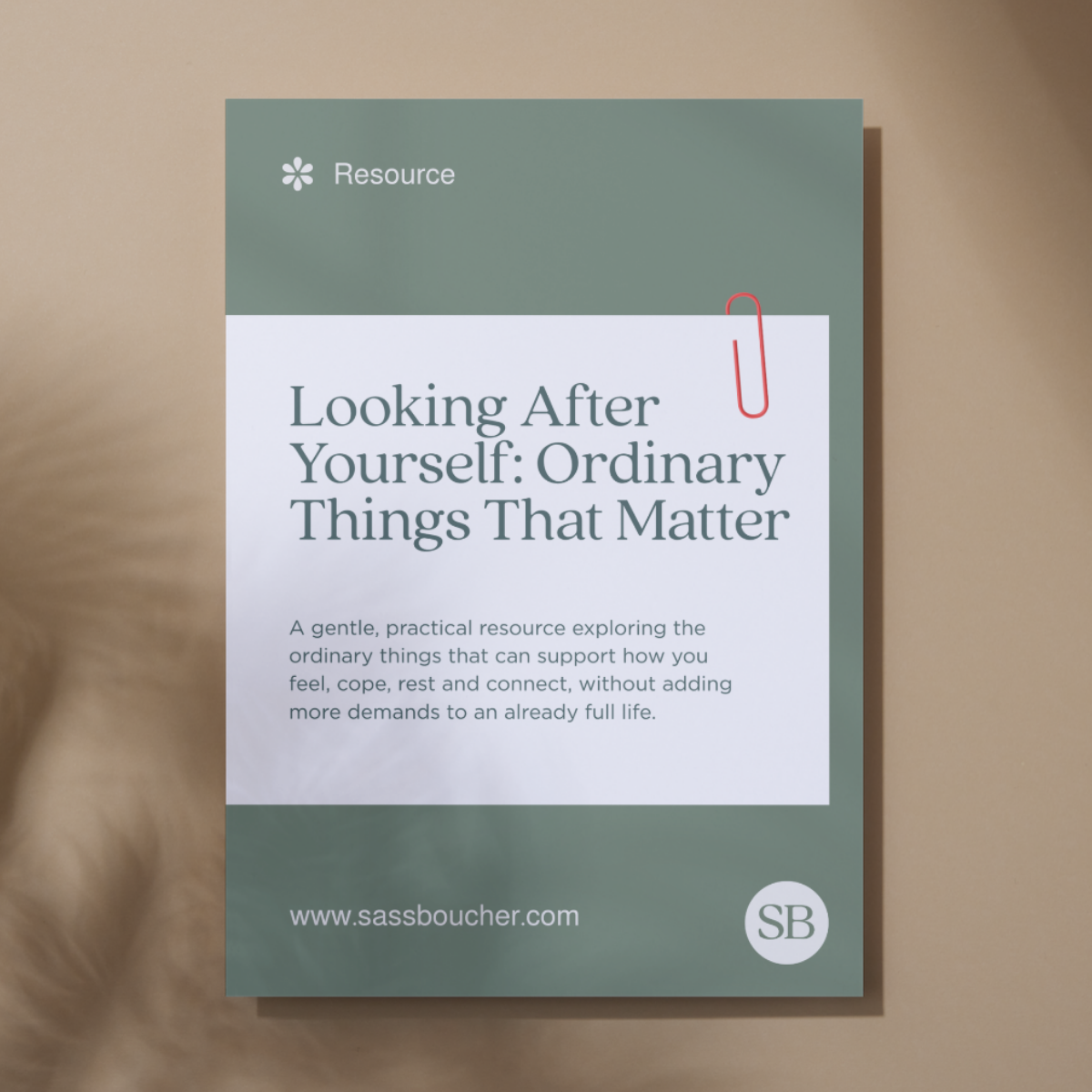
Looking after yourself is not about “doing wellbeing” perfectly or adding more demands to an already full life. This I have learned over many years.
This gentle, practical resource explores some of the ordinary foundations that can support how you feel, cope, rest and connect, without pretending that simple habits can solve difficult circumstances.
Ordinary? Yes. Necessary? Yes too!
What it explores
In a non-directive way, this resource invites you to consider the relationship between emotional wellbeing and some of the ordinary things your body and mind need. It explores sleep, hydration, food and fuel, movement, physical health, stress, connection, curiosity and giving, while recognising that what feels possible will be different for you.
What is included
Nine ordinary foundations that I think can support your wellbeing
Brief, accessible explanations of why I believe they matter
Gentle prompts for noticing what might already be supporting you
A reflective invitation to identify one small, manageable step
Further-support guidance and signposting
Who it may be helpful for
This resource may be helpful if you feel tired, stressed, overwhelmed or disconnected from your own needs, or if you simply want to reflect on the everyday foundations that do, or do not, support you.
It may also be useful if you are a student or practitioner, or if your work involves regularly supporting other people.
Important reflective note
This resource is intended for general information and personal reflection. It is not a checklist, a set of instructions or a replacement for medical advice, therapy, crisis support or specialist help.
Your health, disability, experiences of trauma, caring responsibilities, finances, work and wider life circumstances can all affect what feels possible for you.
This is a digital resource.
Once you have completed the checkout process, you will receive an email containing a link to download the PDF. Nothing will be sent to you by post.
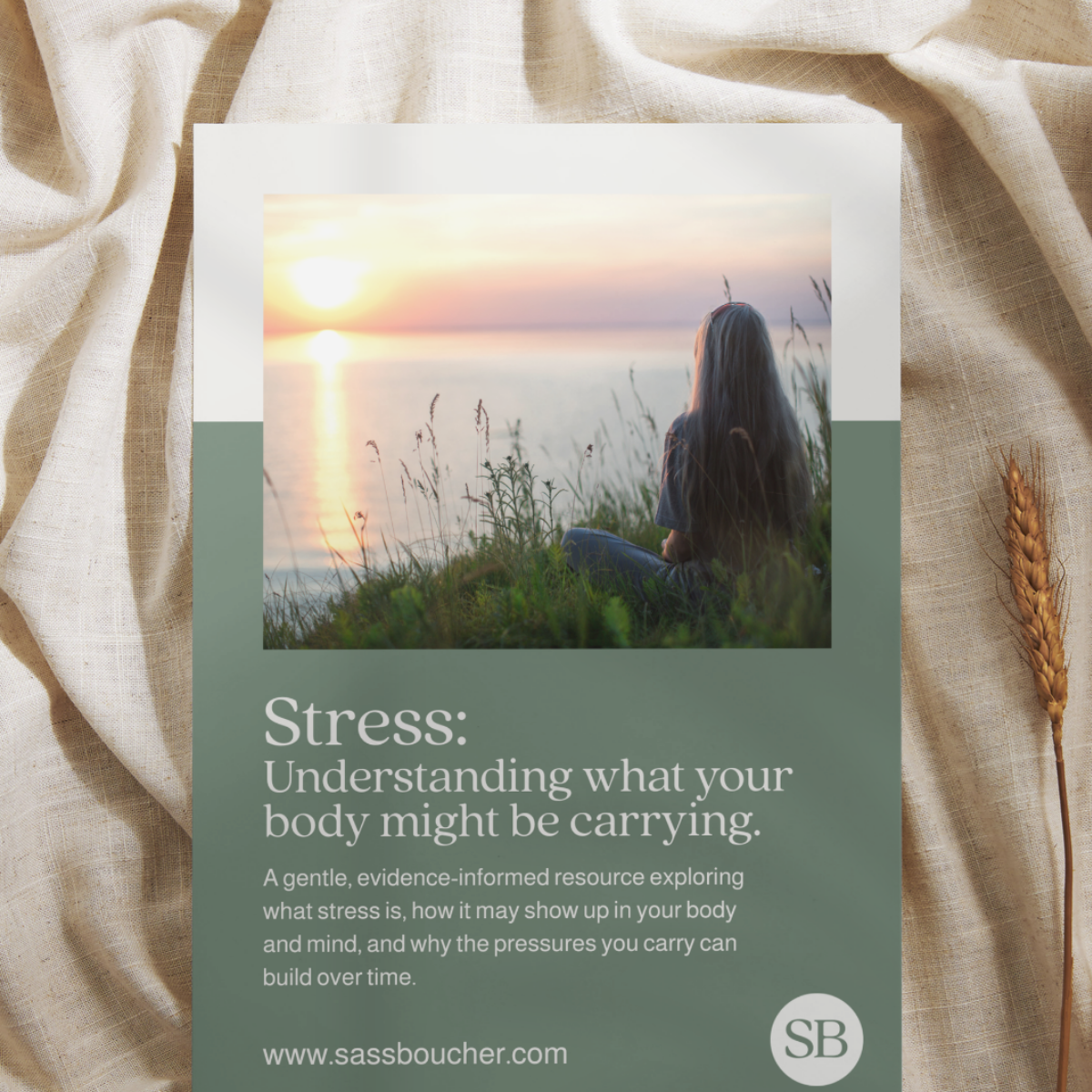
Stress is such a small word, and yet it can describe a great deal of what your body and mind may be carrying.
This gentle, evidence-informed resource explores what stress is, how the stress response works and why pressure can accumulate over time. I’m inviting you to notice how stress may be showing up physically, emotionally and in everyday life, without giving you another list of things to manage or suggesting that you should simply think your way out of difficult circumstances.
Because stress is not “just” anything.
What it explores
This resource considers stress as a real body and mind response to pressure, threat, uncertainty and demand. It explores how the stress response may protect you, what can happen when pressures continue to accumulate, and the concept of allostatic load: the possible wear and tear of repeatedly adapting and carrying on.
It also considers the idea that you are one whole human being across work and life, as well as recognising that stress is not always an individual problem. Sometimes the circumstances themselves need attention, support or change.
What is included
An accessible explanation of what stress is and how the stress response works
A consideration of why stress is not “just stress”
Examples of the physical, emotional and everyday ways stress may appear
An introduction to allostatic load and the cumulative impact of prolonged pressure
Reflections on carrying one whole self across work, home and the rest of life
An exploration of individual support alongside wider circumstances and systemic pressures
Gentle questions to help you notice what may be creating pressure and what might support you
A reflective pause
Further information, support and signposting
Who it may be helpful for
This resource may be helpful if you feel stressed, overwhelmed, exhausted or permanently “on”, or if ordinary things seem to be taking more effort than they usually would.
It may also be useful if you are studying, working in an emotionally demanding role, managing or supporting others, or wondering whether your body and mind have been carrying more than you realised.
Important reflective note
This resource is intended to offer general information, reflection and gentle support. It is not a substitute for therapy, medical advice, crisis support or your own judgement about what feels safe and appropriate for you.
Experiences associated with stress can also have physical or medical causes. New, severe, persistent or unexplained symptoms should not automatically be attributed to stress, and it may be important to seek appropriate medical or professional support.
Some ideas may feel useful and some may not. You are welcome to take what fits and leave what does not.
This is a digital resource.
Once you have completed the checkout process, you will receive an email containing a link to download the PDF. Nothing will be sent to you by post.
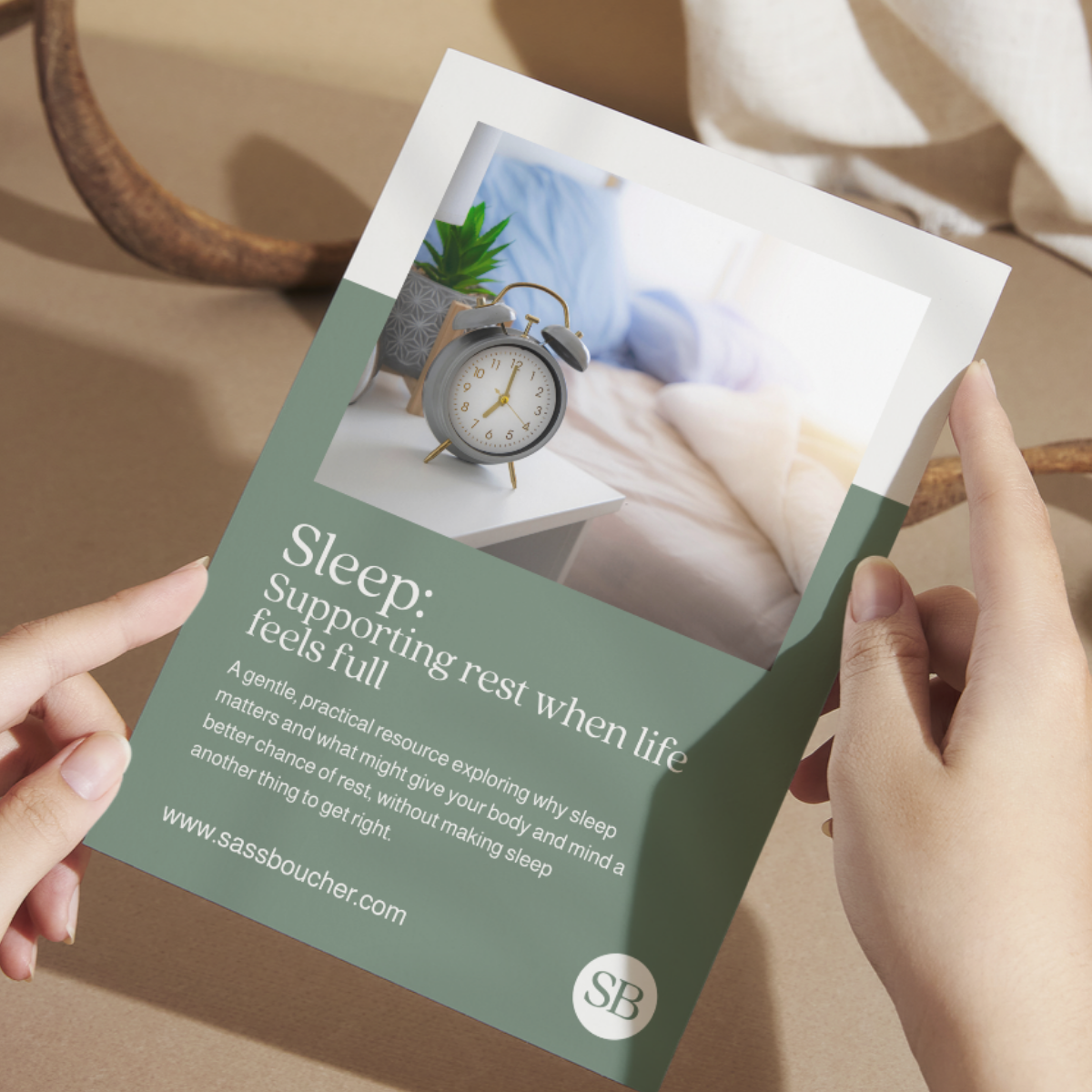
Sleep is one of those things you can take for granted until it becomes difficult. When it does, it can quickly become another task, test or thing you feel you should be getting right.
This gentle, practical resource explores why sleep matters and offers some simple ways to give your body and mind a better chance of rest. It is not about achieving perfect sleep or creating an elaborate bedtime routine. It is about noticing what may be helping, what might be getting in the way, and whether one small change could make rest feel a little more possible.
Because honestly, life asks a lot of most of us.
What it explores
This resource invites you to consider the relationship between sleep, rest and emotional wellbeing. It explores what a lack of sleep can affect, how sleep can become pressured, and some of the ordinary conditions that may help your body and mind begin to slow down.
It also recognises that sleep can be affected by stress, health, pain, medication, hormones, trauma, caring responsibilities, shift work, grief, anxiety, depression and the wider circumstances of your life.
What is included
An accessible explanation of why sleep matters
Some of the ways poor or interrupted sleep may affect you
An exploration of the pressure and worry that can develop around sleep
Gentle suggestions for supporting rest and creating a steadier rhythm
Reflections on light, screens, caffeine, alcohol, food and your sleep environment
Prompts to help you notice what supports rest and what might be getting in the way
A simple reflective question
Further-support guidance and signposting
Who it may be helpful for
This resource may be helpful if sleep has become difficult, interrupted or pressured, or if you are finding that tiredness is affecting how you feel, think or cope.
It may also be useful if your studies, work, caring responsibilities or experience of supporting other people make it difficult to switch off and rest.
Important reflective note
This resource is intended for general information and personal reflection. It is not a set of instructions or a replacement for medical advice, therapy or specialist sleep support.
Sleep can be affected by physical health, medication, pain, mental health, trauma and sleep-related conditions. If your sleep difficulties continue, significantly affect your daily life or leave you feeling unwell or unsafe, it is important to seek appropriate professional support.
This is a digital resource.
Once you have completed the checkout process, you will receive an email containing a link to download the PDF. Nothing will be sent to you by post.